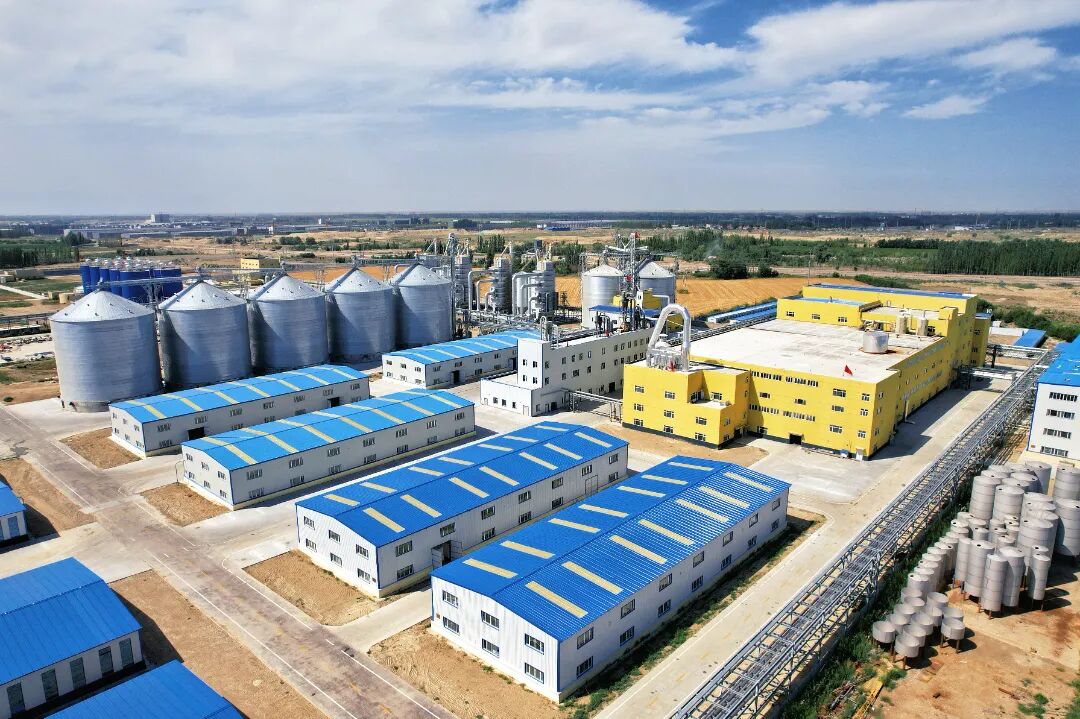
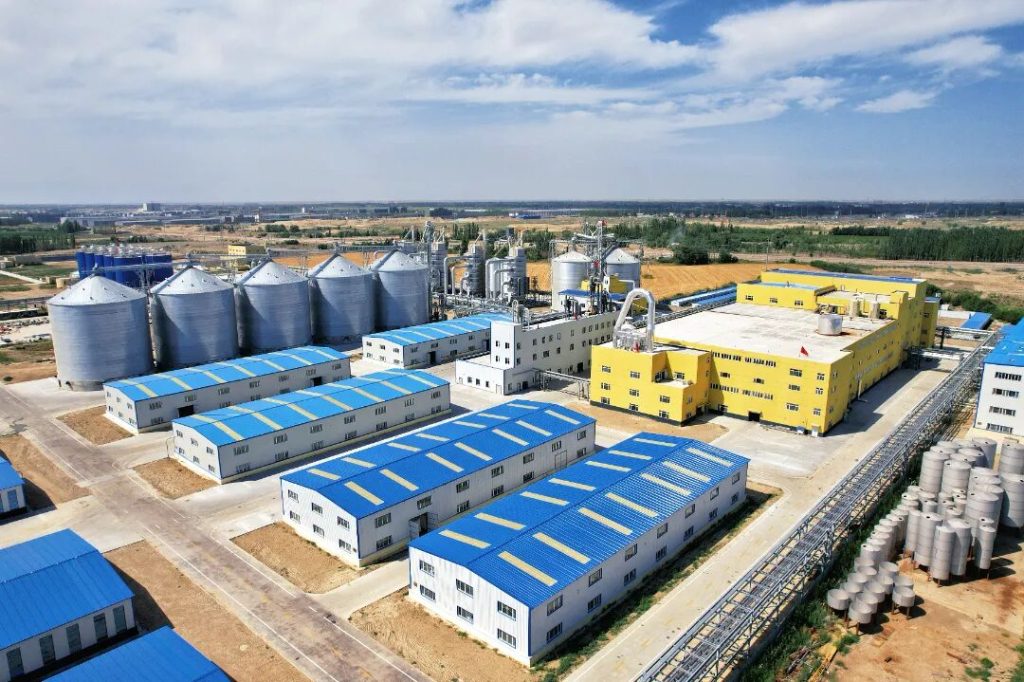
In the early winter season, the Horgos Economic Development Zone Corps Sub-Zone is increasingly chilly, yet inside the production workshop of Xinjiang Yilihong Biological New Materials Technology Co., Ltd., there is a warm and bustling scene. Entering the fermentation workshop, robotic arms precisely grasp golden corn kernels and feed them into the inlet. Through a series of automated processes including processing, fermentation, and extraction, ordinary corn is gradually “transformed” under the control of precision instruments into high-value-added products such as isoleucine, hyaluronic acid, and erythritol.
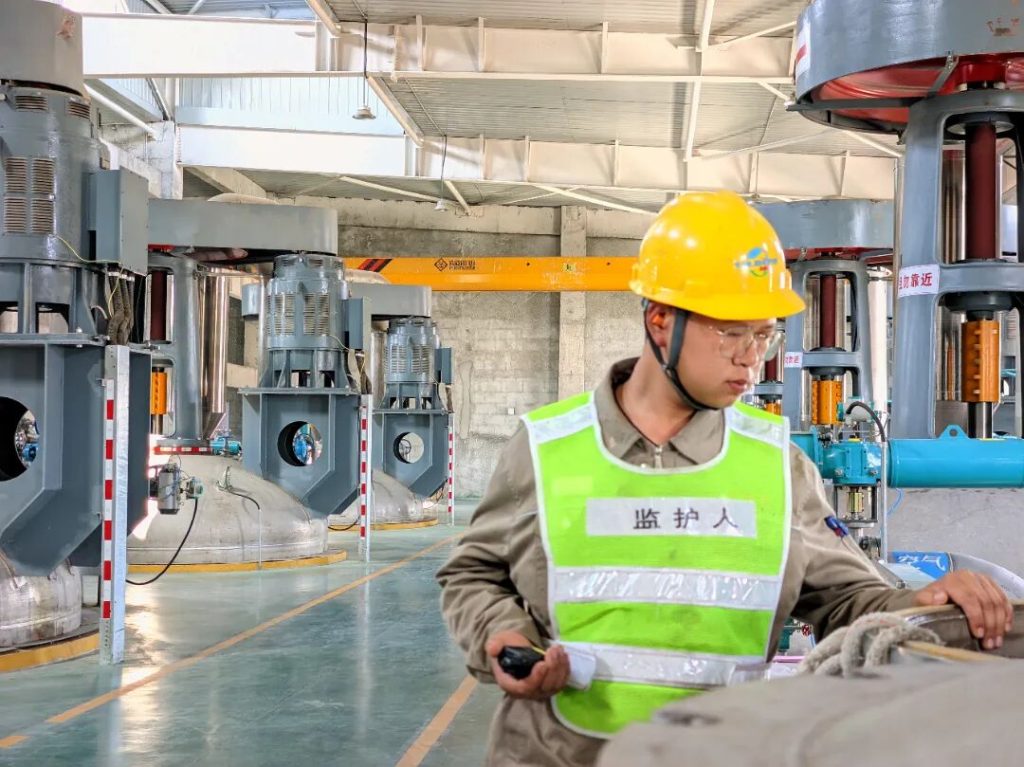
“The automation control rate for fermentation and extraction has now reached over 80%, and most processes can be completed with just a click of a button. This marks that we are steadily advancing toward becoming an intelligent, modern enterprise,” said Ma Guijun, director of the fermentation workshop, while closely watching the parameter curves on the central control screen and briefing reporters.
As a key project of Shandong Hongda Biotechnology Co., Ltd. responding to the “Belt and Road” Initiative and fulfilling its mission of industrial aid to Xinjiang, Xinjiang Yilihong New Material Technology Co., Ltd. settled in the Bingtuan Sub-district of Horgos Economic Development Zone in 2018. The company invested a total of 4.5 billion yuan to build a 500,000-ton agricultural by-product deep processing and comprehensive utilization project, with a planned land area of 1,422 mu, advanced in three phases.
“We initially chose to take root in the Fourth Division not only because the approximately 3 million mu of corn planting area in Ili can provide sufficient raw materials, but also because we valued the location advantages, policy support, and favorable business environment here,” recalled Gao Honglei, deputy general manager of Xinjiang Yilihong New Material Technology Co., Ltd. At the beginning of the project's landing, the Bingtuan Sub-district of Horgos Economic Development Zone provided “one-on-one” assistance. Procedures such as project approval and environmental assessment, which originally required six months, were all completed in just four months, winning valuable time for the rapid advancement of the project.
In 2022, the first-phase project was successfully put into operation, enabling corn in the Ili River Valley to achieve a leap from “grain returning to the granary” to “multiplied in value.” In the product exhibition hall of Xinjiang Yilihong New Material Technology Co., Ltd., rows of various products displayed in glass bottles attract attention, from erythritol used in food additives, to hyaluronic acid used in cosmetics, and to vitamin B12 used in the pharmaceutical field, all demonstrating the enormous potential of corn deep processing.
“From corn to vitamin B12, the added value can increase by about 50 times.” Gao Honglei picked up a bottle of isoleucine product and introduced that these products have been widely used in multiple fields such as pharmaceuticals, food, feed, and cosmetics, with very broad market prospects. Since being put into operation, the company has purchased 518,300 tons of corn from surrounding regimental farms and townships and carried out deep processing to transform it into high-value-added products, achieving an output value of nearly 3 billion yuan, employing more than 900 people, and successfully being rated as a Bingtuan-level key leading enterprise in agricultural industrialization, an autonomous region-level enterprise technology center, and a national-level technology-based small and medium-sized enterprise.
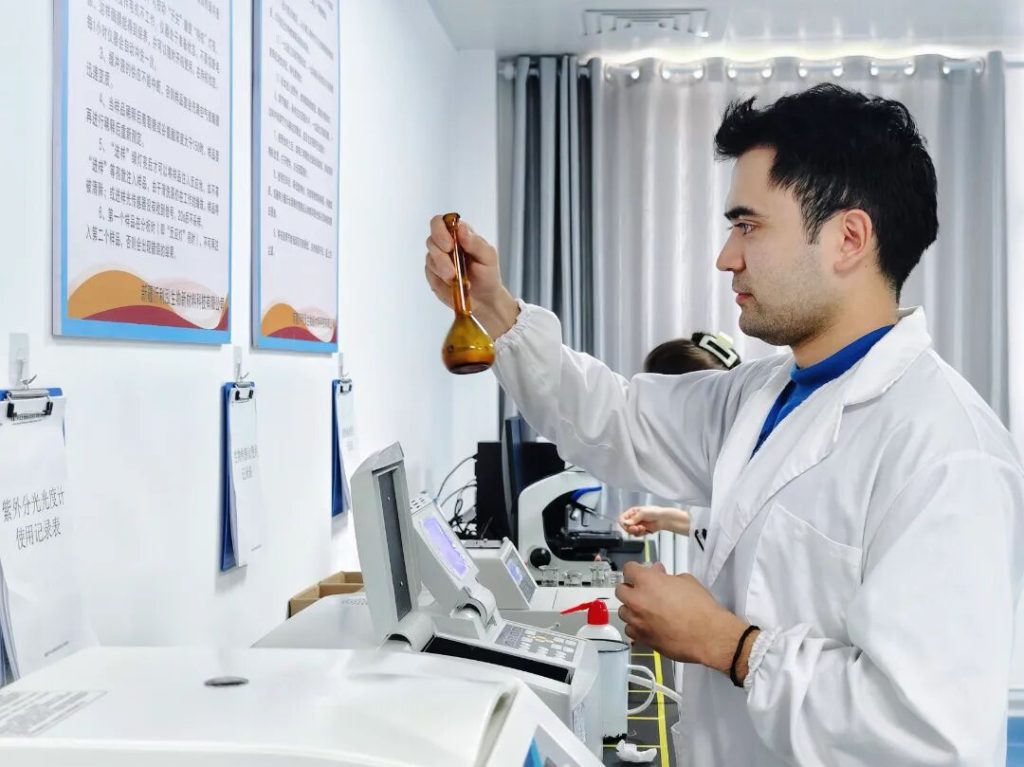
Technological innovation is the core driving force for the high-quality development of private enterprises. Since its establishment, Xinjiang Yili Hong Biological New Material Technology Co., Ltd. has set the development philosophy of “R&D first,” building an innovation system of “key laboratory + technology center + postdoctoral workstation,” equipped with 117 sets of experimental equipment, and assembled a 65-member professional R&D team. In the company's R&D center, researchers are operating an inductively coupled plasma spectrometer for product testing, making it the first enterprise in the Ili River Valley to use such equipment.
“This instrument has fast detection speed and high sensitivity, and can precisely control the heavy metal content of raw and auxiliary materials and finished products to ensure product quality and safety,” said Zhang Jie, a researcher. The company continues to increase investment in scientific research each year and cooperates deeply with universities such as Jiangnan University, East China University of Science and Technology, and Shihezi University to accelerate the transformation of scientific and technological achievements. Up to now, the company has obtained 34 utility model patents in total, submitted 5 utility model patent applications, and successfully received approval this year to establish a national-level postdoctoral research workstation, injecting stronger intellectual support into technological innovation.
In September 2023, the second-phase project with a total investment of 1 billion yuan was officially launched, building production lines with an annual output of 20,000 tons of isoleucine and 15,000 tons of tryptophan. Northern Xinjiang has a long winter and a short construction period. To speed up project progress, more than 300 builders worked day and night, with cranes hoisting steel pipes, welders welding pipe seams, and electricians laying wires. The construction site was bustling with activity everywhere. “With support from all sides, we completed 1 billion yuan of investment in just 10 months, and some production lines have been built and are in trial operation. Such speed and efficiency are inspiring,” introduced Bao Ming, general commander of the project department. After the second-phase project is put into operation, the company's product variety will be further enriched, production capacity will be greatly increased, and the annual corn processing volume will reach 300,000 tons.
The development of the enterprise has not only strengthened itself, but also driven local economic development and increased the income of employees and the masses. It is understood that the corn processed and transformed annually by Xinjiang Yilihong New Material Technology Co., Ltd. is equivalent to the output of 300,000 mu of cultivated land, effectively broadening the sales channels of local growers and truly turning the “granary” into a “money bag.” In the company's production workshops, many people from surrounding regimental farms and townships have achieved “employment at their doorstep,” allowing them to take care of their families, obtain stable income, and learn professional skills.
Leveraging the institutional innovation dividends of the Fourth Division Block of the Horgos Area within the China (Xinjiang) Pilot Free Trade Zone, Xinjiang Yili Hong Biological New Material Technology Co., Ltd. is actively planning to expand export channels to Central Asia, Europe, and the United States while deepening its presence in the domestic market. This year, the company was successfully selected for Xinjiang's “Specialized, Refined, Distinctive, and Innovative” board enterprise list, becoming a benchmark enterprise in the field of deep processing of agricultural and sideline products. “During the ‘15th Five-Year Plan” period, we will leverage the technological advantages of our R&D center to drive product expansion into higher-end fields such as pharmaceuticals and cosmetics, striving to achieve an annual output value of 9.8 billion yuan and provide 2,500 jobs once the project reaches full production capacity," said Gao Honglei with great confidence.
Today, Xinjiang Yilihong New Material Technology Co., Ltd. is taking scientific and technological innovation as its engine and circular development as its path, continuously extending the corn deep processing industrial chain, enhancing product added value, and writing a splendid chapter of a private enterprise taking root and developing in the border region while empowering the local area. From kernels of corn to pieces of high-value new materials, from a single production line to a full industrial chain layout, Yilihong has interpreted the vitality and responsibility of a private enterprise through practical work and innovation, and has also injected a steady stream of private-sector strength into the high-quality development of the Bingtuan in the new era.
This article is reprinted from the WeChat public account @Kekedala News