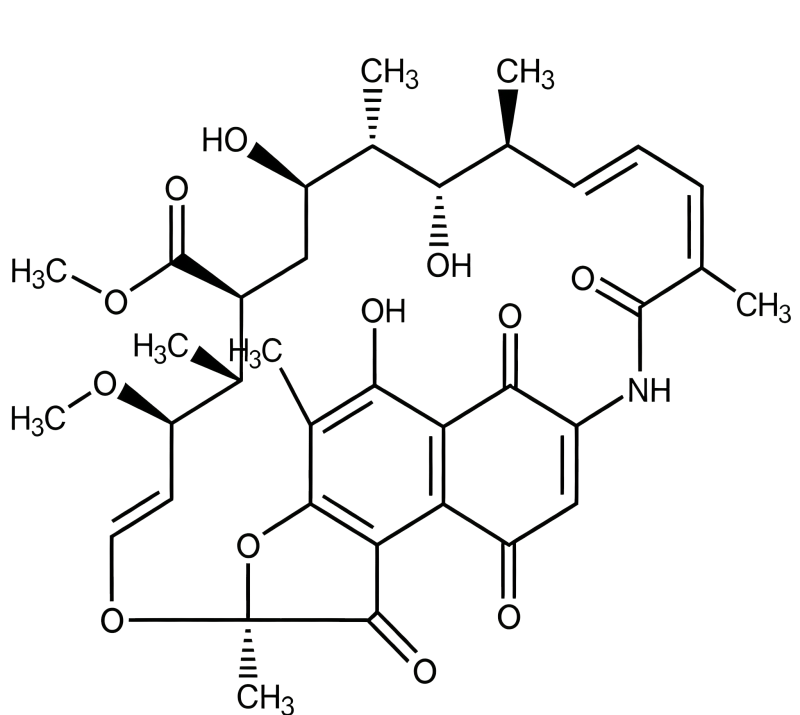
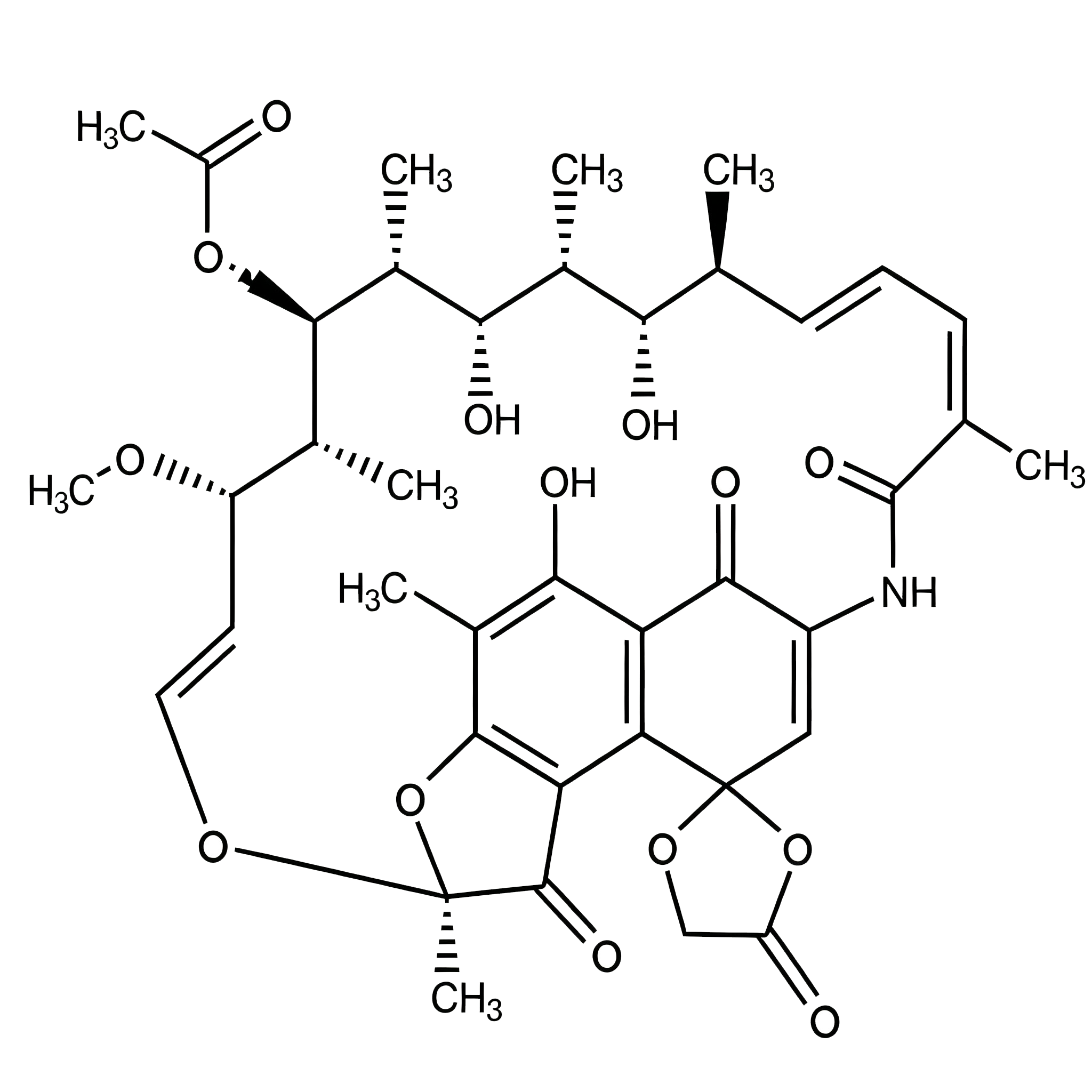
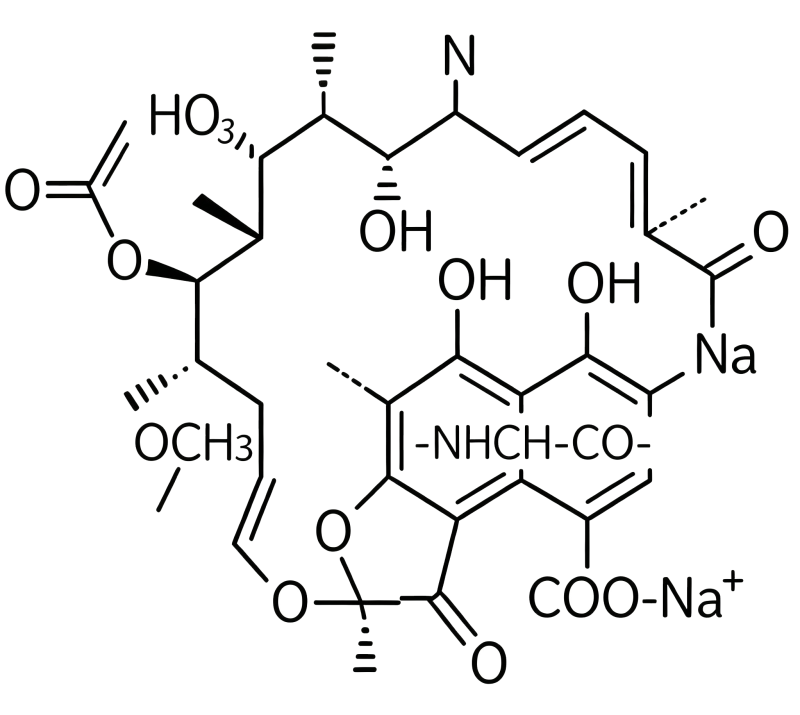
The product's most core use is as a key intermediate of semi-synthetic rifamycin antibiotics, and it is the direct precursor for the production of first-line anti-tuberculosis drugs such as rifampicin and rifapentine. Unlike downstream finished drugs, rifamycin S itself also possesses certain antibacterial activity, exhibiting inhibitory effects against Gram-positive bacteria (including methicillin-resistant Staphylococcus aureus, MRSA), and its mechanism of action is the inhibition of bacterial DNA-dependent RNA polymerase. In addition, it is also an important tool compound for studying the biosynthesis and resistance mechanisms of quinone antibiotics, and is used in chemical semi-synthetic methods to develop new rifamycin derivatives.
Antibacterial action
It possesses antibacterial activity against Gram-positive bacteria (including methicillin-resistant Staphylococcus aureus, MRSA), exerting its effects by inhibiting bacterial DNA-dependent RNA polymerase, and can be used to study bacterial transcription processes and gene expression regulation.
Pharmaceutical synthesis intermediate
It is a key intermediate of semi-synthetic rifamycin antibiotics, mainly used for the synthesis of first-line anti-tuberculosis drugs such as rifampicin and rifapentine, and is an important synthetic raw material in the pharmaceutical industry.
Quinone antibiotic research
As a representative compound of quinone antibiotics, it can be used to study the biosynthetic pathways, mechanisms of action, and resistance mechanisms of quinone antibiotics, and is an important tool compound in microbiology and medicinal chemistry research.
Chemical synthesis raw material
It is used as a raw material in organic synthesis and can be used to develop new rifamycin derivatives through chemical semi-synthetic methods, providing a foundation for the research and development of novel antibacterial drugs.