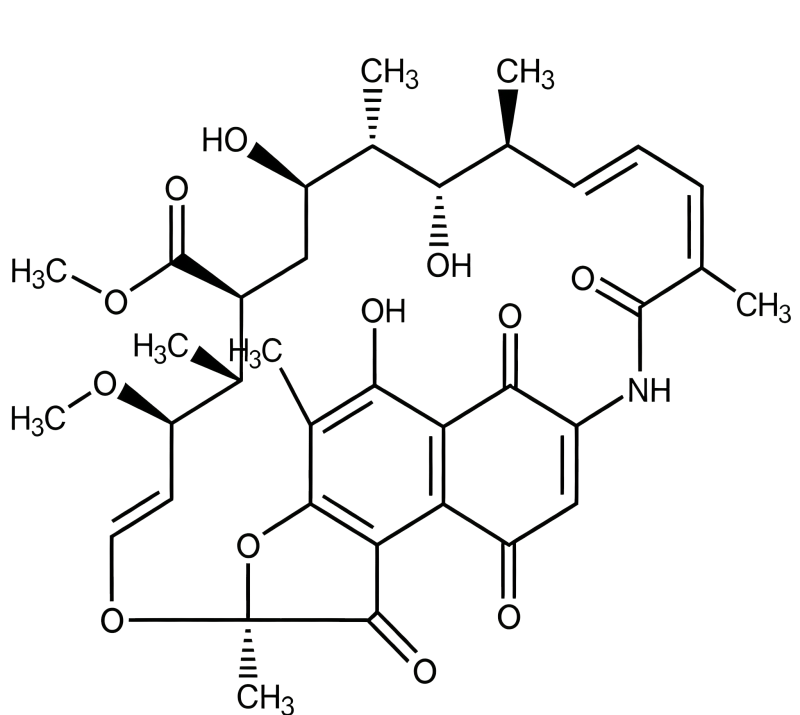
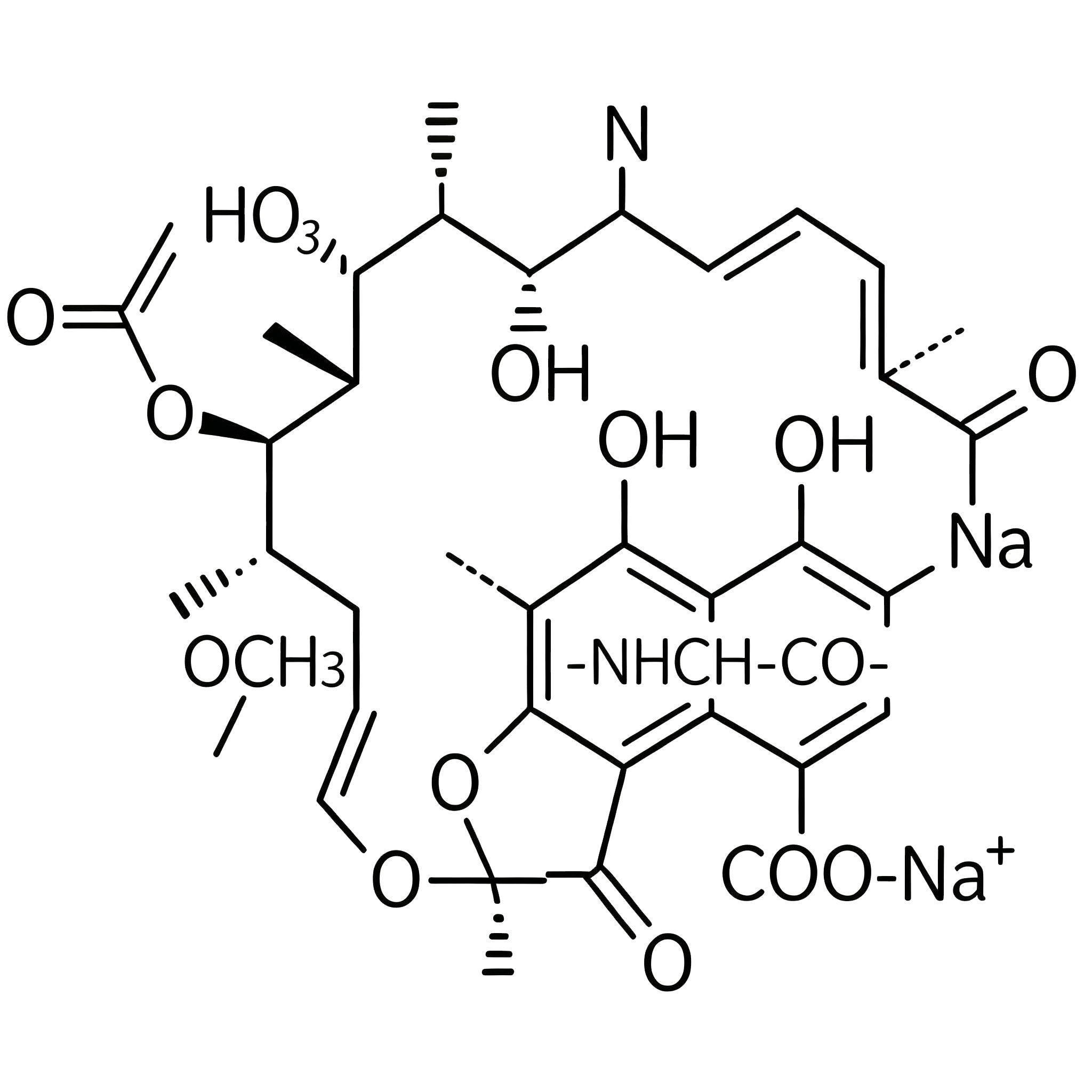
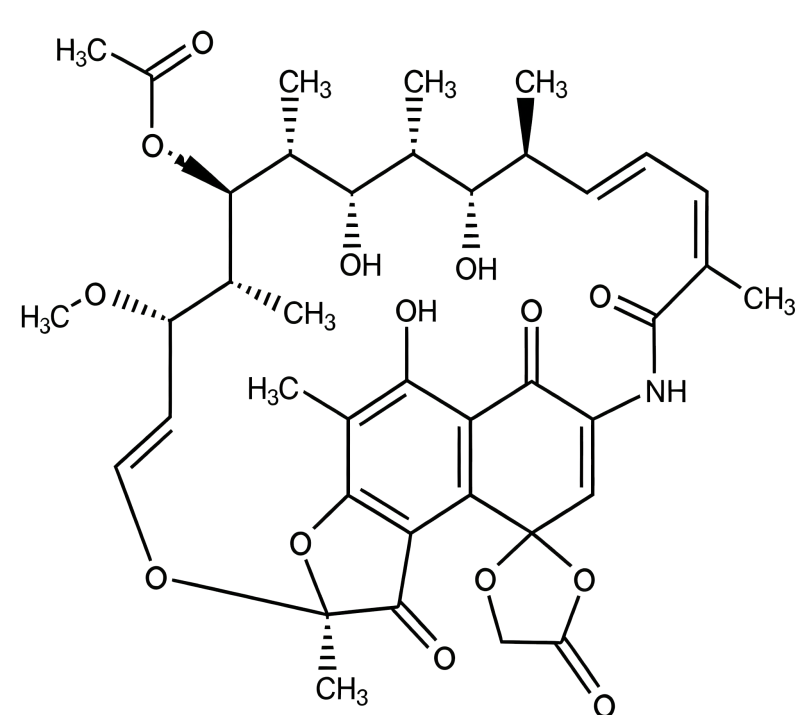
Rifamycin S sodium is a key starting material for semisynthetic rifamycin antibiotics, primarily used in the synthesis of first-line anti-tuberculosis drugs such as rifampicin, rifandin, and rifapentine. Its precursor, rifamycin S, is a quinone antibiotic that exhibits antibacterial activity against Gram-positive bacteria (including methicillin-resistant Staphylococcus aureus, MRSA) by inhibiting bacterial DNA-dependent RNA polymerase.
Antibacterial and anti-tuberculosis effects
It exhibits antibacterial activity against Gram-positive bacteria (including methicillin-resistant Staphylococcus aureus, MRSA) and Mycobacterium tuberculosis by inhibiting bacterial DNA-dependent RNA polymerase, and can be used in research on Mycobacterium tuberculosis infection and Bacteroides fragilis infection.
Pharmaceutical synthesis intermediate
It is a key starting material for semisynthetic rifamycin antibiotics, used in the synthesis of first-line anti-tuberculosis drugs such as rifampicin, rifandin, and rifapentine, and can also be used to study genes potentially involved in the conversion of rifamycin SV to rifamycin B.
Clinical therapeutic applications
Rifamycin sodium for injection can be used in combination therapy for diseases caused by Mycobacterium tuberculosis infection and severe infections with methicillin-resistant Staphylococcus aureus, Staphylococcus epidermidis, and refractory Legionella, and its sodium salt form can also be used for the treatment of traveler's diarrhea.
Scientific research tool
It is used to study prokaryotic transcription mechanisms, RNA polymerase function, and gene expression, as well as to explore bacterial survival strategies under stress conditions and the development of drug resistance mechanisms, and can also serve as a reference standard for the detection and quantification of rifamycin compounds.